
Kitchen Appliances Guide for 2026: What to Know Before You Buy
Choosing kitchen appliances and fixtures is one of the most important—and sometimes most confusing—parts of a kitchen project. The right selections not only impact how your kitchen looks, but also how it functions every day. From panel-ready fridges and slim dishwashers to undermount sinks and custom hoods, each choice comes with details to consider, like clearances, hardware, venting, or how the appliance will integrate with cabinetry. To help simplify the process, we’ve pulled together this overview of the most common types of kitchen appliances and fixtures, along with practical notes and recommendations to keep in mind before you buy.
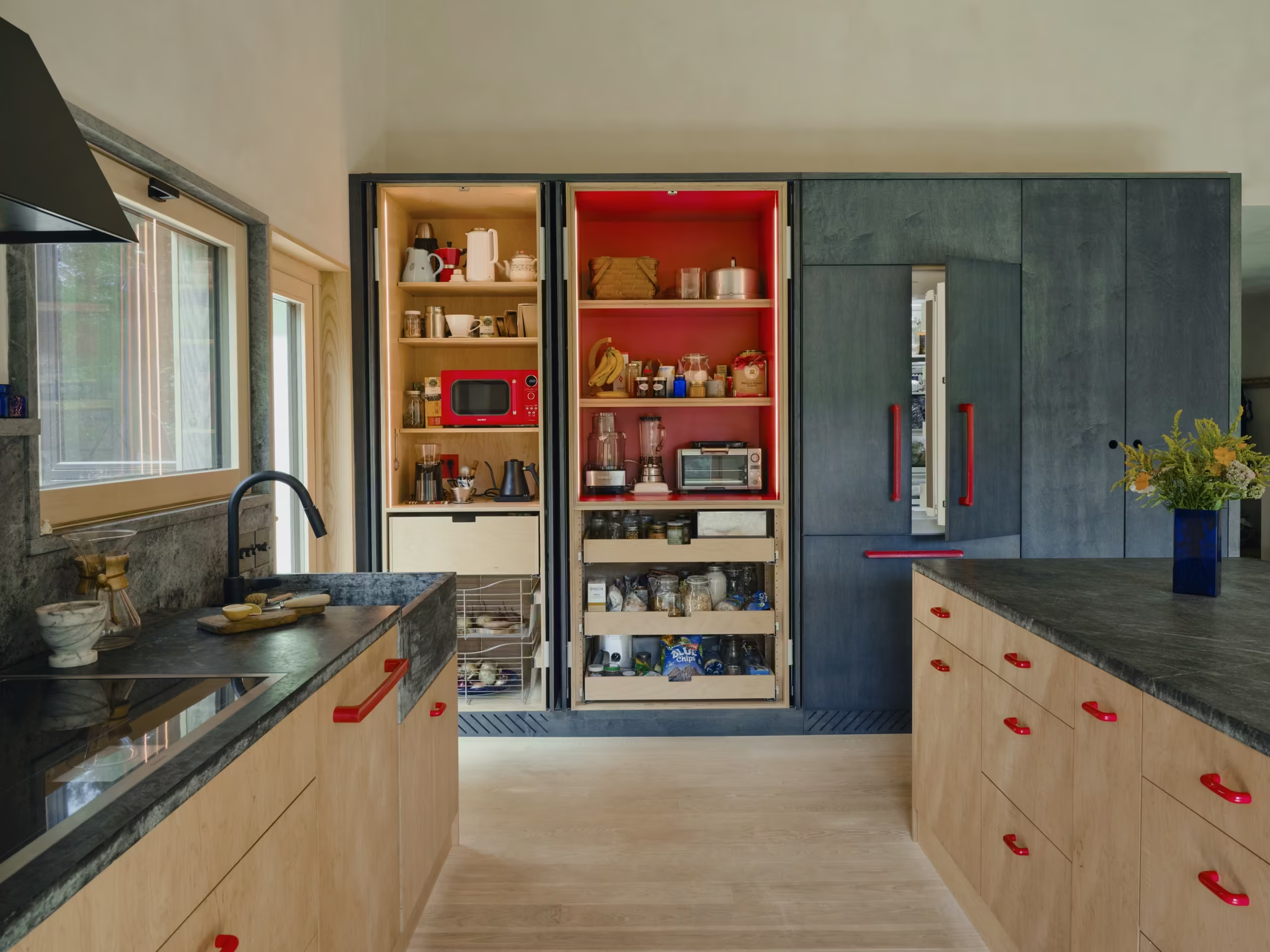
What Kitchen Appliances and Fixtures Do I Need to Choose?
While every kitchen is different, most projects require decisions across a similar set of appliance and fixture categories. Beyond the obvious essentials like a refrigerator, range, and sink, there are often additional elements to consider—such as ventilation, dishwashers, specialty appliances, and plumbing fixtures—that can significantly impact both layout and cabinetry design.
Understanding which items you’ll need to select (and which details matter for each) helps streamline the process and ensures your kitchen is designed to support how you actually cook, clean, and live in the space.

Refrigerators
There are three main types of refrigerators to consider:
Counter-Depth Refrigerators
- The most common option
- Typically 24–30 inches deep
- Panels on either side can usually be counter-depth (or about 1″ deeper to align with the counter)
- Keep in mind that the doors will extend beyond the cabinet line and may require extra aisle clearance
- Learn more on this Whirlpool blog!
Full-Depth Refrigerators
- Less common today
- Typically over 30 inches deep, often 35–36 inches
- Will extend past the cabinet line and require deeper panels on either side
Built-In Refrigerators
- The most expensive option
- Available in stainless steel or panel-ready (more on that below)
- Designed to be counter-depth, with doors that can open without protruding past surrounding panels
- Always check specifications—some models require 25″+ of depth
- Require specific hardware
- More info here!
Refrigerator widths and heights vary widely depending on style and brand. Always check your manufacturer specifications for required clearances (such as air gaps between the fridge and surrounding panels). If no clearances are specified, plan for at least ½” on all sides. Also check door swing requirements. If a refrigerator door opens toward a wall, we recommend including at least 4″ of filler and panel between the fridge and the wall to allow for proper access.
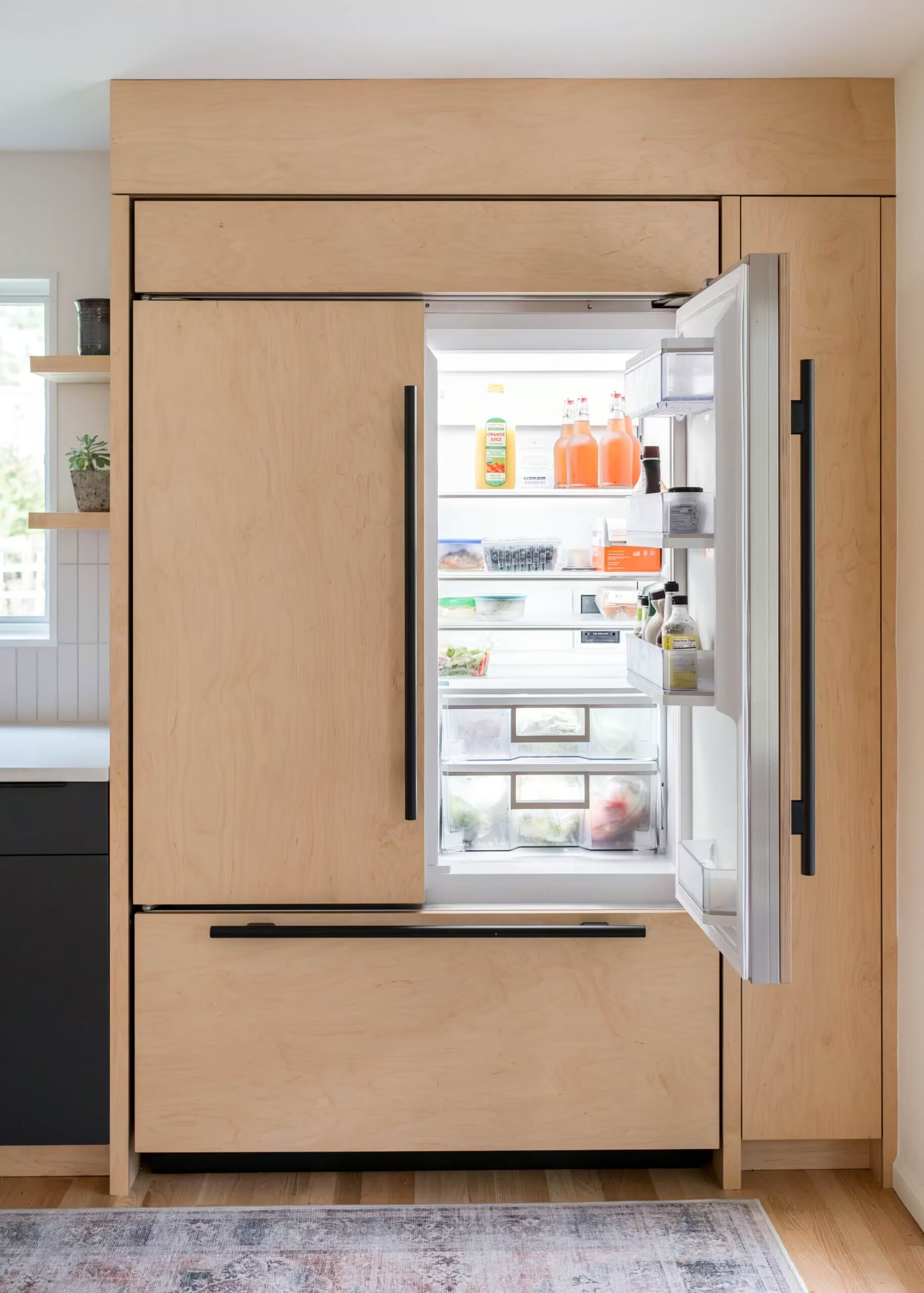

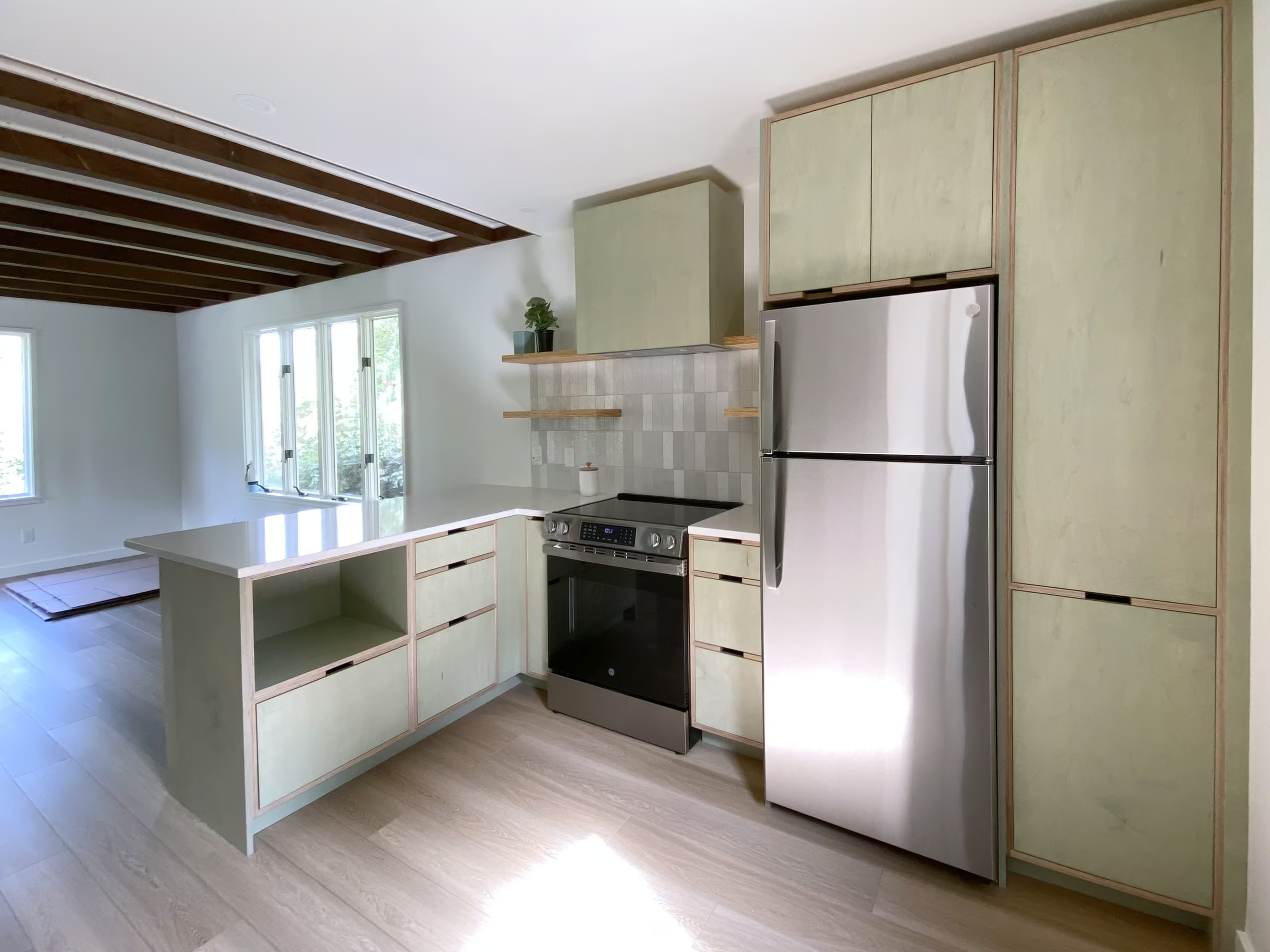
Brands we recommend for refrigerators: Bosch, Fisher & Paykel
Dishwashers
Most dishwashers come in either 18″ or 24″ widths, with 24″ being the standard size. That said, we often recommend 18″ dishwashers—especially for smaller kitchens or households with one to two people. They can be run more frequently, so you don’t have to wait days to fill a full-size dishwasher.
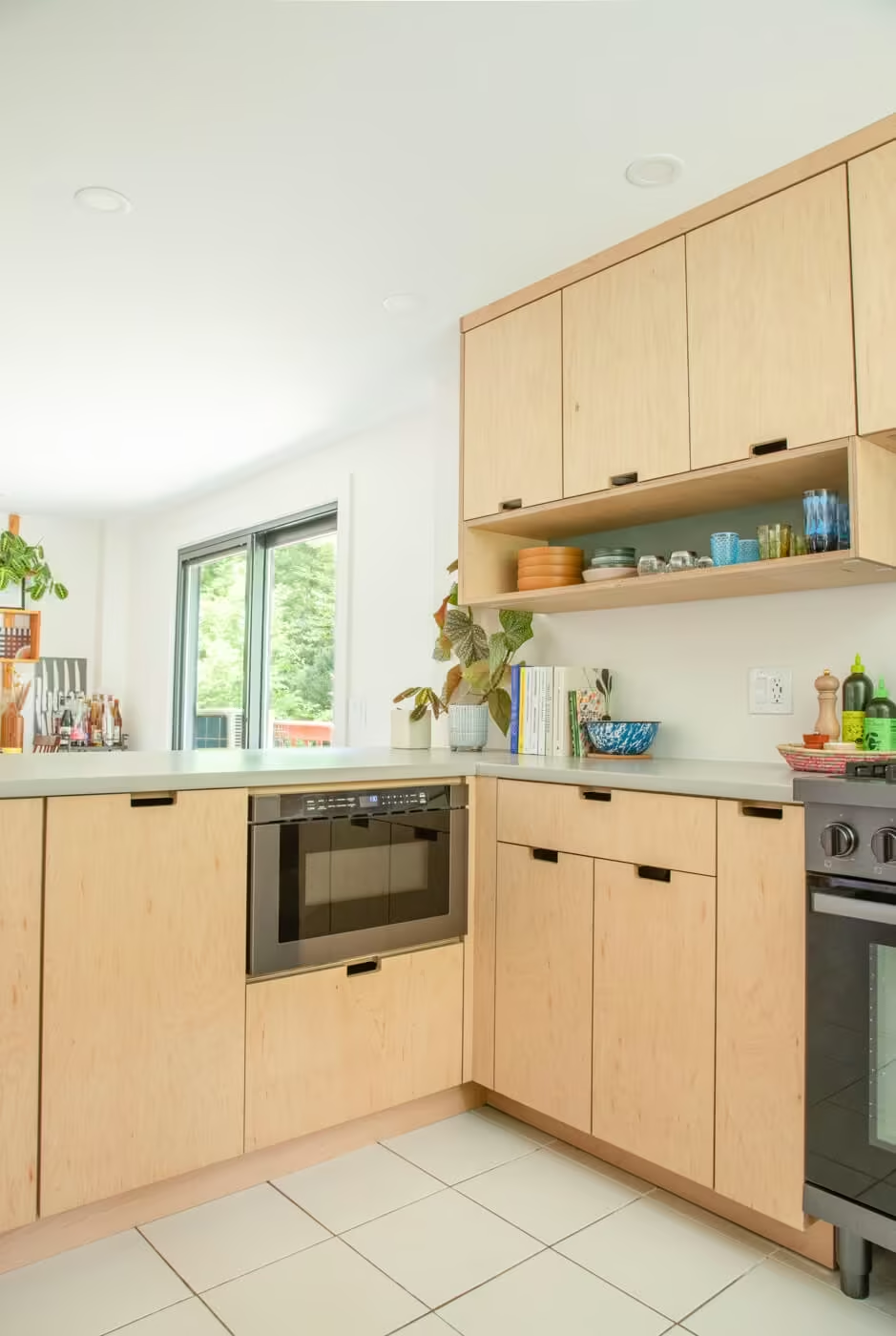
Drawer dishwashers are also an excellent, space-saving option and can work especially well in compact or highly customized layouts.
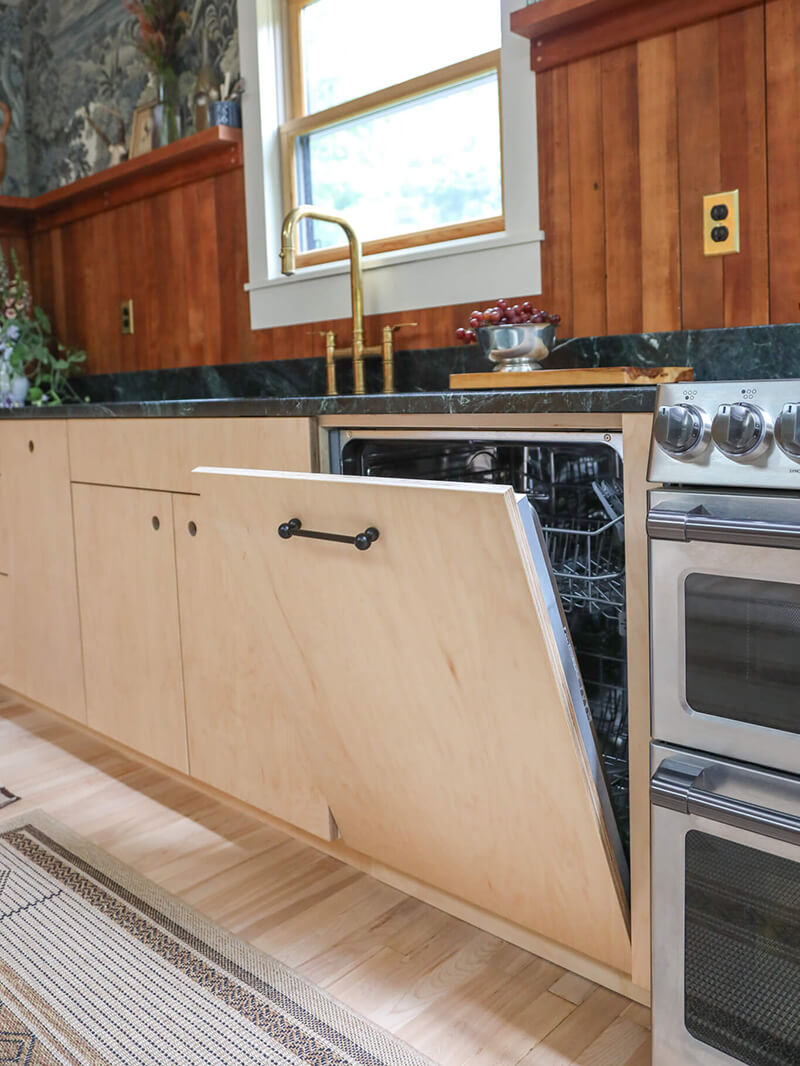
REMEMBER: Dishwashers are easy to conceal with a custom cabinet panel. Look for panel-ready models, which are specifically designed to accept a finished panel that matches your cabinetry for a seamless, built-in look.
Ranges & Cooktops
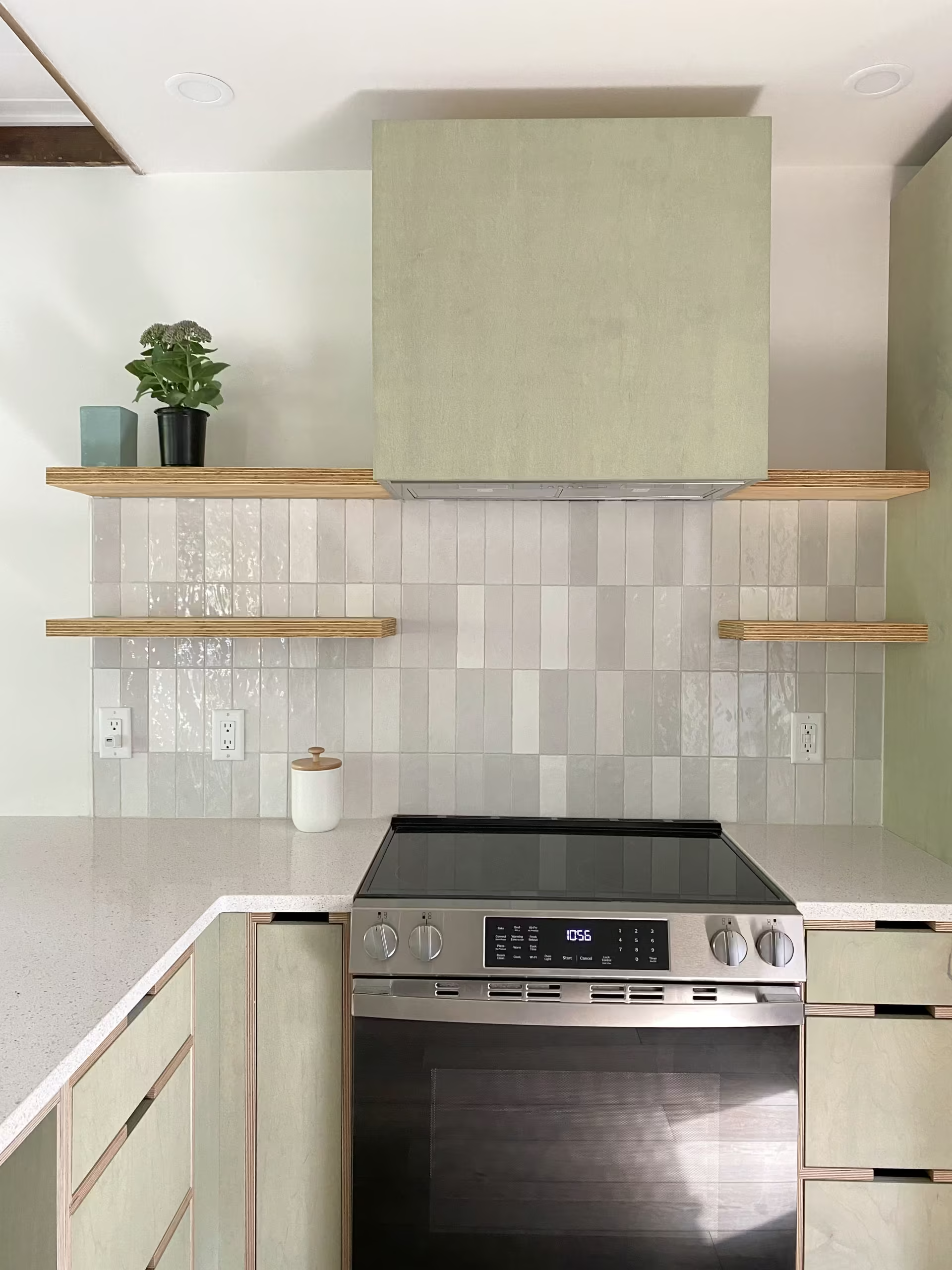
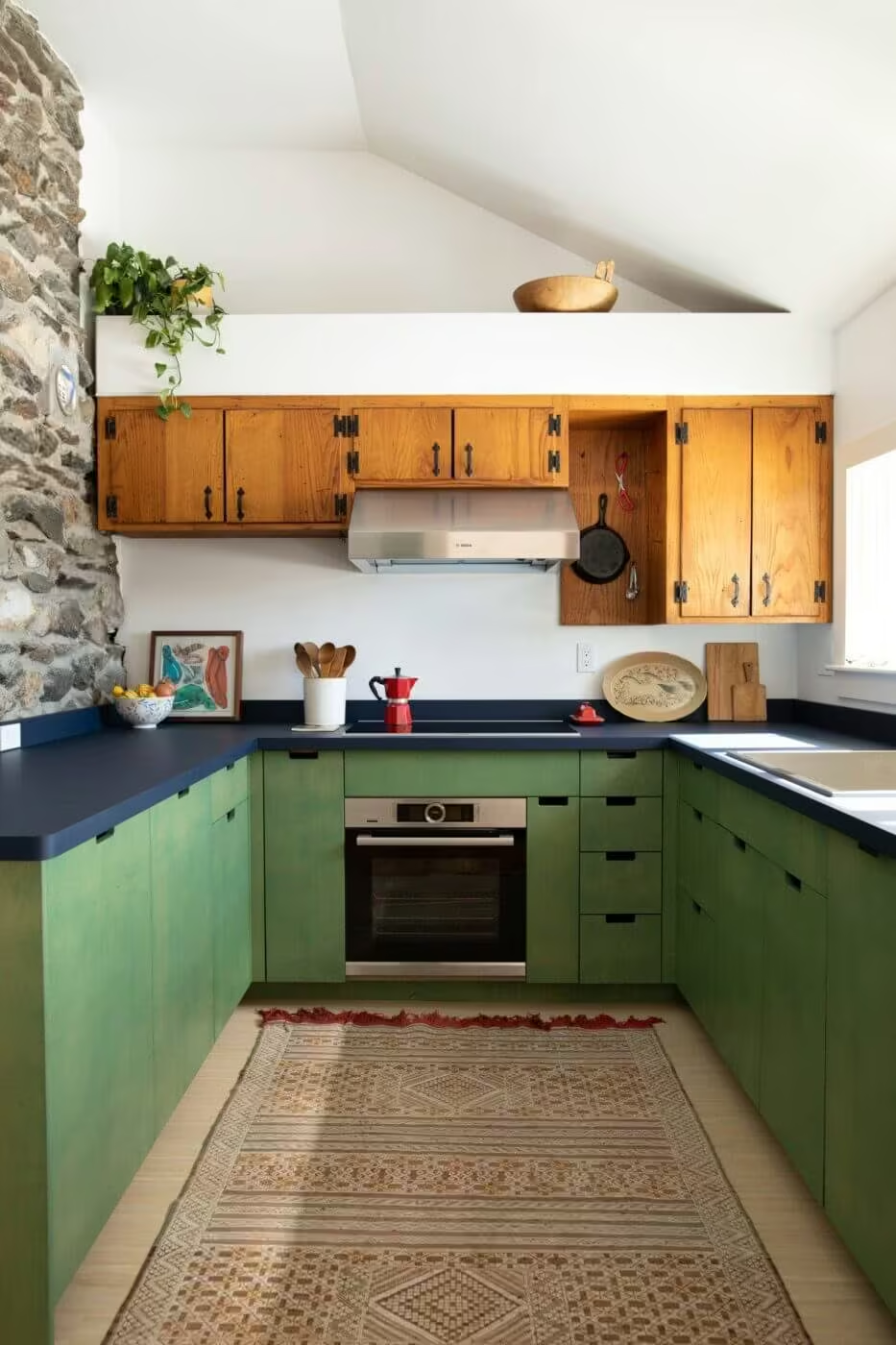
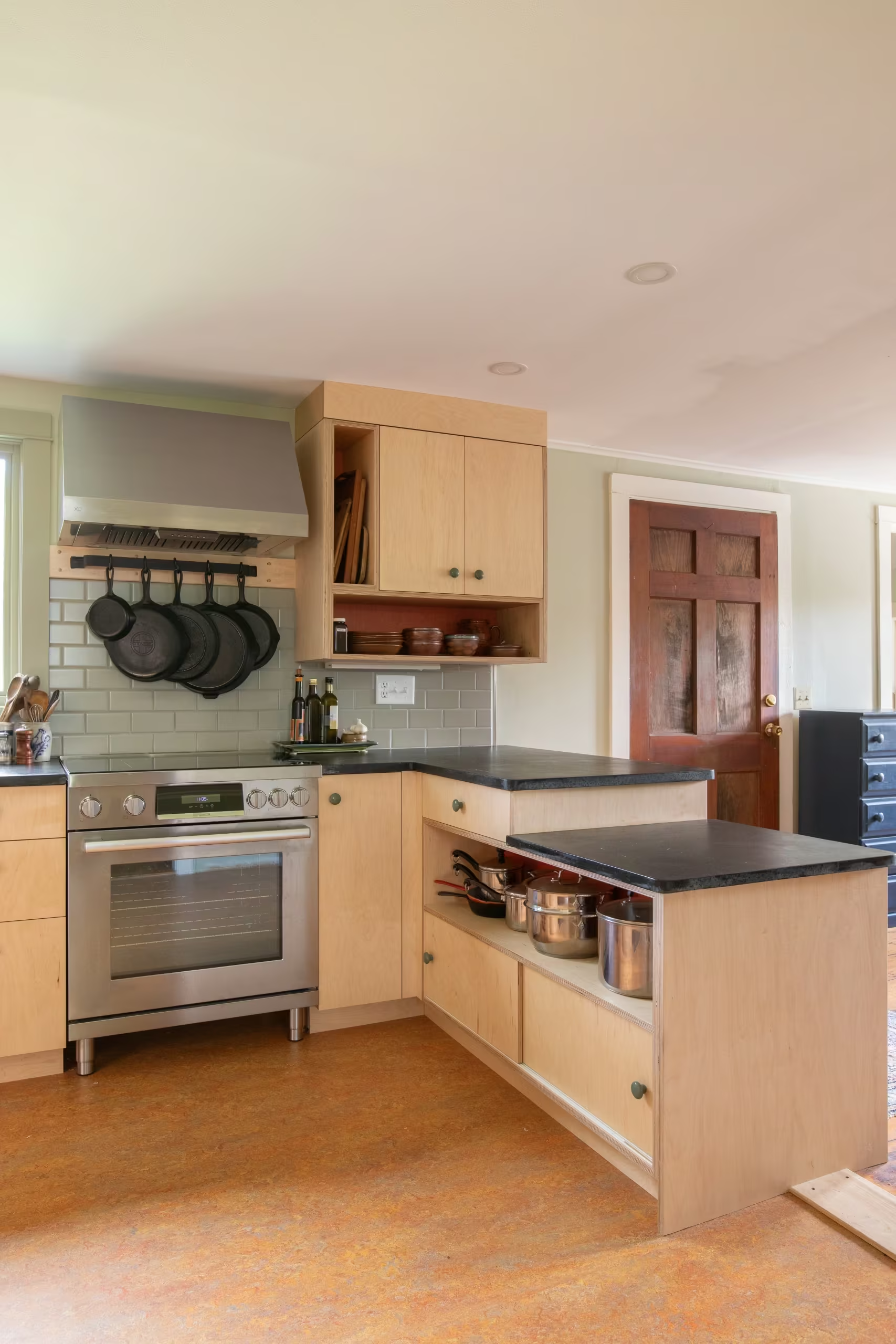
Free-Standing vs. Slide-In Ranges
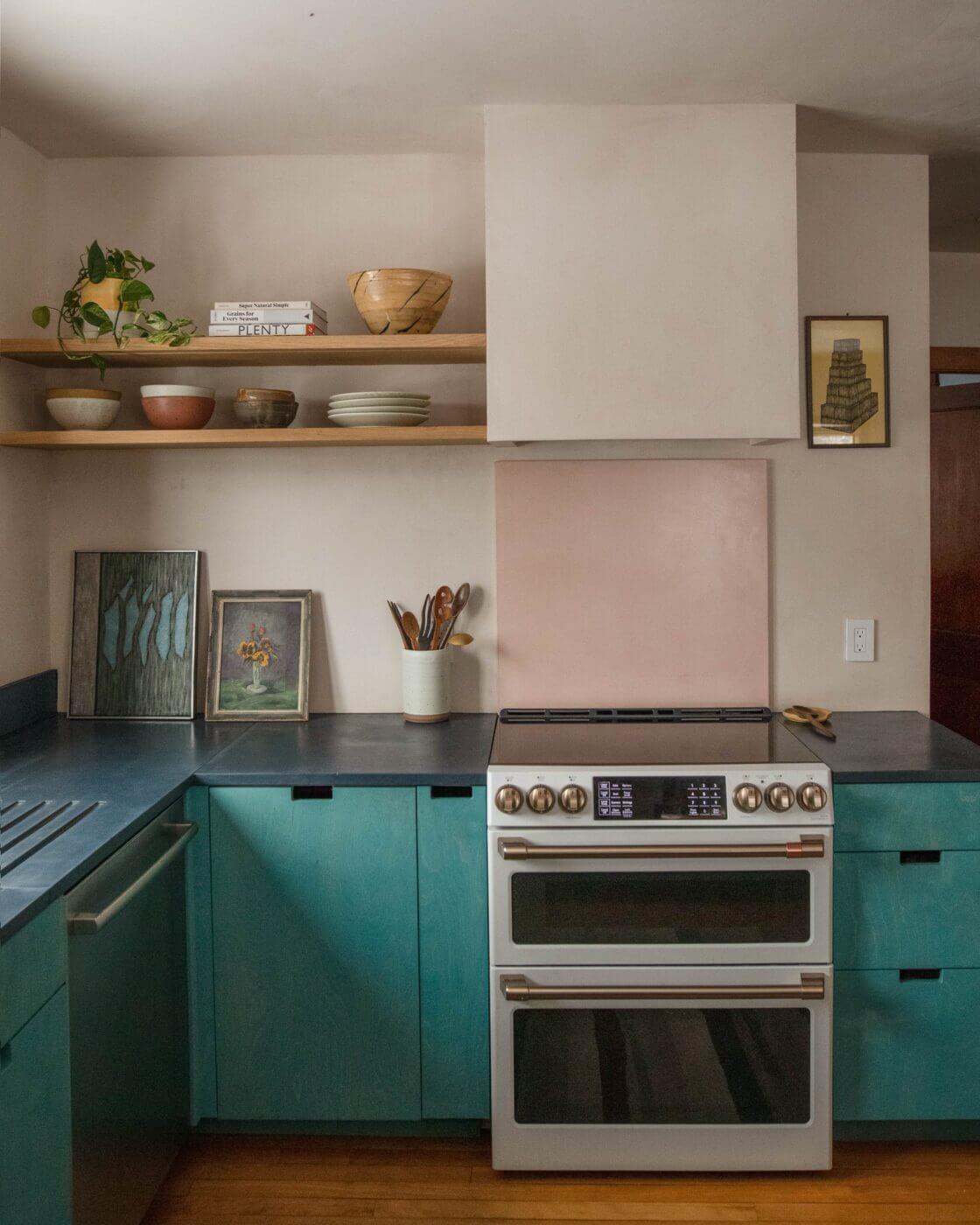
- Free-standing ranges are the most common and include a backguard, creating separation from the wall.
- Slide-in ranges sit flush with the cabinetry and countertop for a more integrated look.
Be mindful that range handles and knobs often extend past surrounding cabinetry. This can impact nearby pull-out cabinets or walkways and should be factored into layout planning.
Other Options to Consider
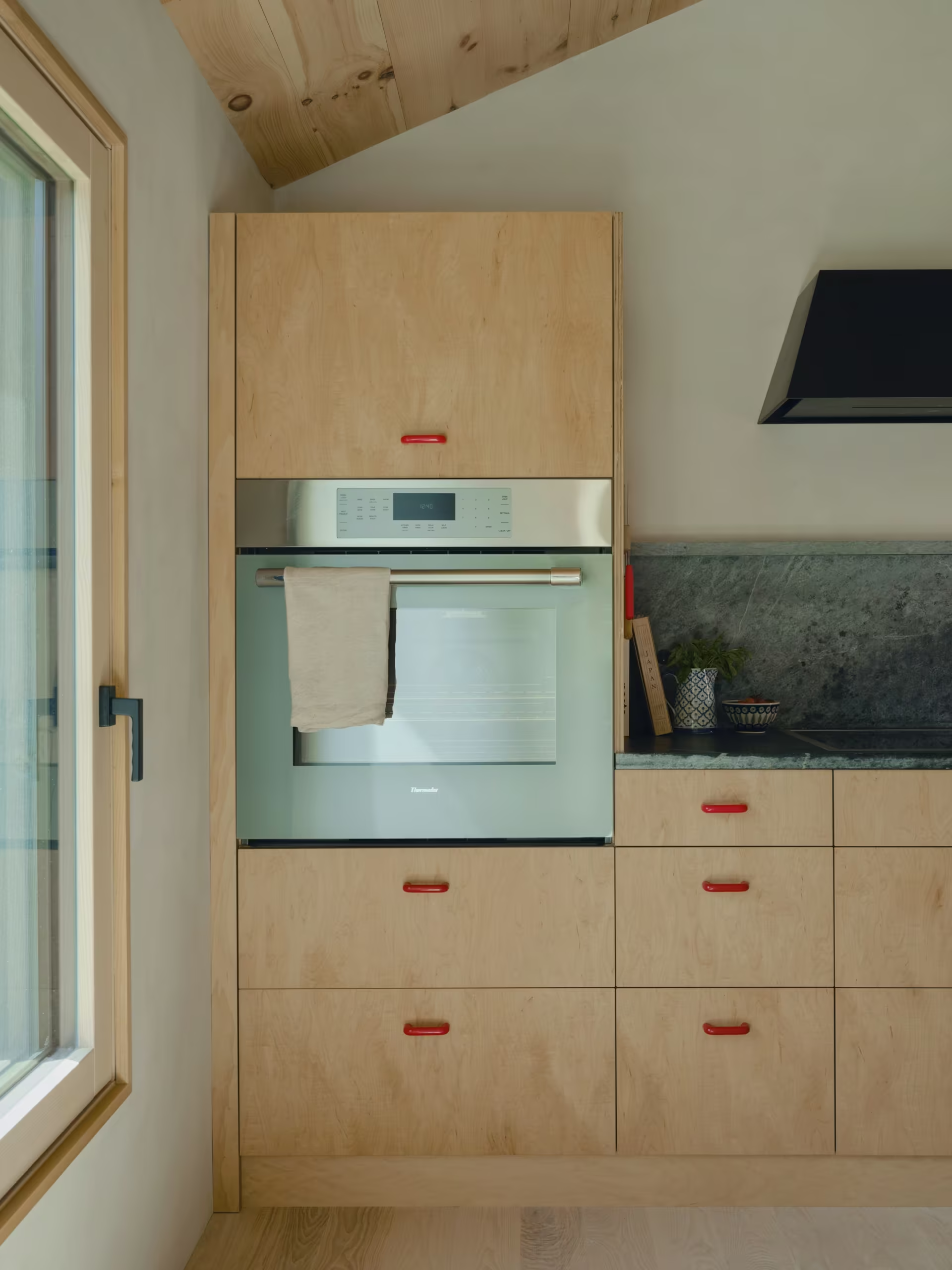
Built-In Ovens: Can be installed in wall cabinets, base cabinets, or stacked below a drop-in cooktop for a cleaner, built-in appearance.
Drop-In Cooktops: Installed flush with the countertop, with cabinets below.

Hoods and Ventilation
Proper ventilation is a critical—but often underestimated—part of kitchen design. A well-chosen hood helps remove smoke, grease, heat, and odors from your space, protecting both indoor air quality and surrounding cabinetry. Hood size, style, and venting requirements can all impact cabinet layout, ceiling height, and overall kitchen aesthetics, so it’s important to plan these details early.
There are three main types of range hoods to consider:
Chimney-style Hoods
Chimney-style hoods are a popular choice for their classic vertical form and strong visual presence. They typically extend from the range up to the ceiling and can act as a focal point in the kitchen, especially in more open layouts. These hoods are available in a range of finishes and sizes and often provide robust ventilation performance.
Under-cabinet Hoods
Under-cabinet hoods are compact ventilation units installed beneath an upper cabinet. They are commonly found in older kitchens or in layouts where space is limited. While they tend to be more discreet, they generally offer less visual impact and may have more limited ventilation power compared to larger hood styles.
Hood inserts
These are designed to be installed inside a custom enclosure built from plywood or drywall. This allows the hood to blend seamlessly with surrounding cabinetry or architectural elements while still providing effective ventilation. Inserts offer flexibility in design, but require careful coordination to ensure proper sizing, venting, and clearances.
When selecting a hood, be sure to review the manufacturer’s specifications for required clearances, ducting size, and venting direction. These details can affect cabinet dimensions, ceiling conditions, and whether the hood can be vented externally or recirculated.
Downdraft Venitlation
Downdraft systems pull smoke and odors downward rather than up and are typically integrated into the cooktop or installed directly behind it. While they can be visually discreet and work well in minimalist or island layouts where an overhead hood isn’t desired, downdraft ventilation is generally less powerful than traditional range hoods. These systems also require space within the cabinetry below for ducting and mechanical components, which can reduce available storage and should be planned carefully during the design phase.


Microwaves
Microwaves are often an afterthought in kitchen design, which can result in them taking up valuable countertop space. Fortunately, there are a few ways to integrate them more thoughtfully:
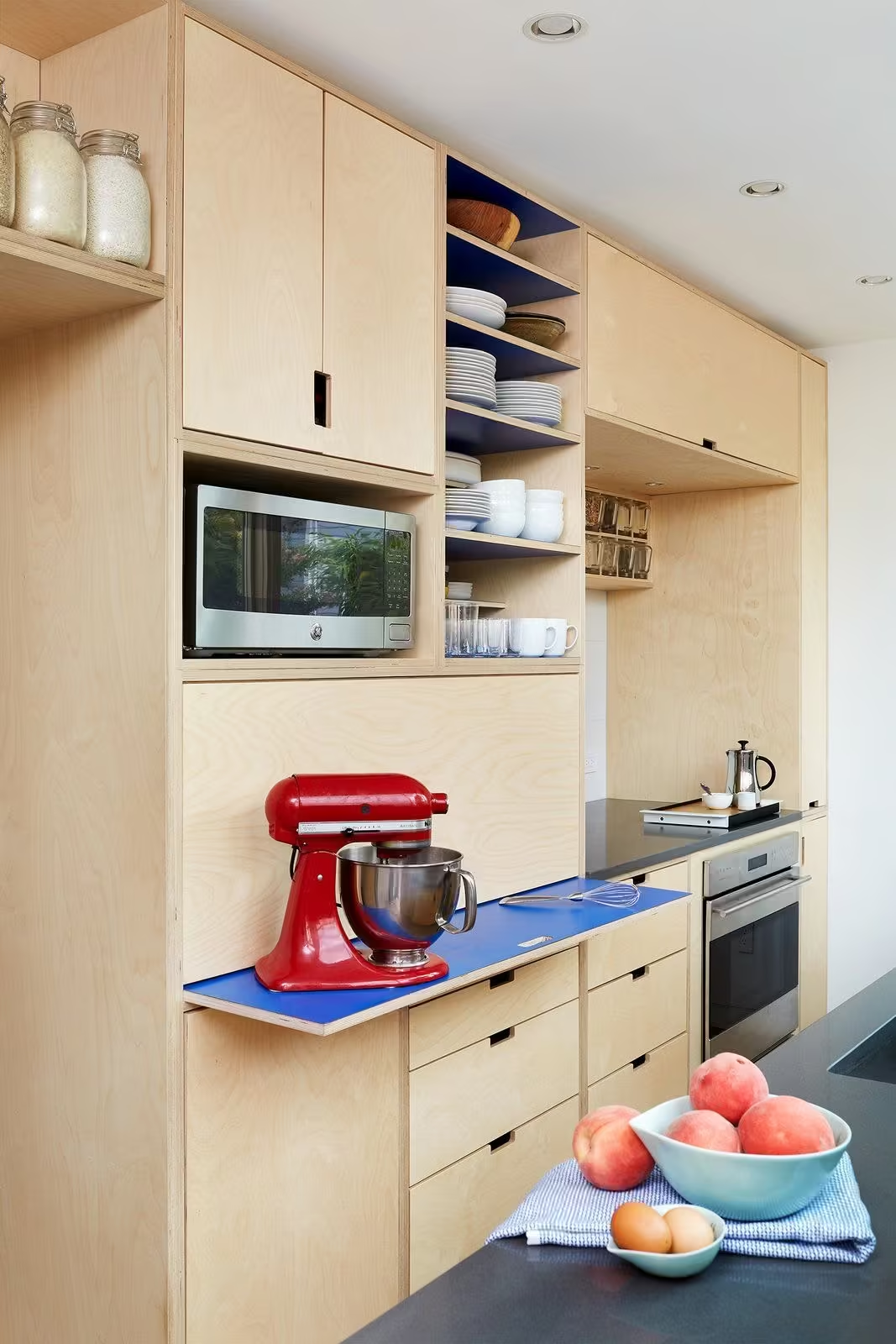
Boxed-In Microwaves: The simplest way to free up counter space is to create a dedicated cabinet opening sized specifically for your microwave. If you choose this option, be sure to review the manufacturer’s venting requirements in the instruction manual.
Built-in Microwaves: These are designed specifically for cabinetry integration and typically don’t require the same ventilation as countertop models. Some come with trim kits—an accessory that helps the microwave appear permanently built-in.
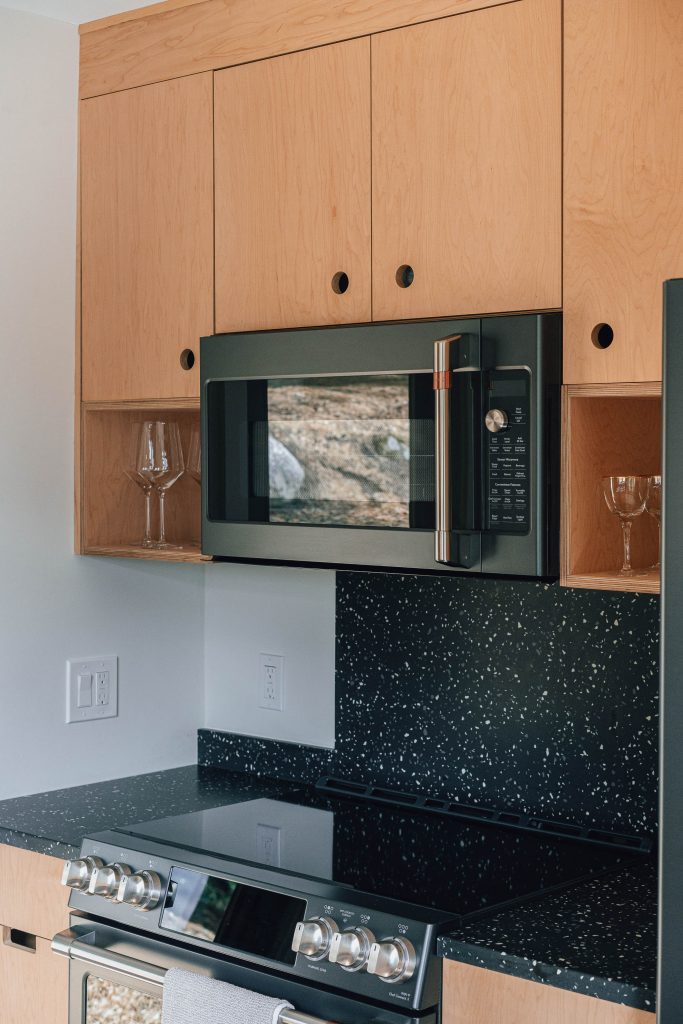
Hood Microwaves: Hood microwaves combine a microwave with a built-in venting system and are typically installed above a range or cooktop. While they can be a space-saving solution, their ventilation power is often more limited than a dedicated range hood. For kitchens where cooking performance and proper ventilation are a priority, we generally recommend a separate hood whenever possible—but hood microwaves can be a practical option in smaller kitchens or budget-conscious projects.
Countertop Microwaves: These are the most common and flexible option, as they don’t require built-in installation or custom cabinetry. However, they can take up valuable counter space and often end up placed wherever there’s an available outlet. If you plan to use a countertop microwave, it’s worth thinking ahead about where it will live (like your pantry, counter, or coffee nook) so it doesn’t disrupt workflow or sightlines—especially in smaller kitchens.
Photographer: Stacy Zarin Goldberg
Sinks
Sinks come in a wide range of shapes and sizes to suit different cooking and cleaning needs.
- Drop-In (Top-Mount) Sinks: Sit on top of the countertop with a visible rim.
- Undermount Sinks: Installed beneath the countertop, creating a seamless transition between counter and sink.
We generally only recommend undermount sinks for most kitchens, but with laminate countertops we suggest drop-in sinks, since the particleboard core of laminate is more susceptible to water damage from undermount installations.
An apron-front sink (often called a farmhouse sink) refers to the exposed front panel that extends past the cabinet face. It’s a style of sink—not a type—and can be either undermount or drop-in depending on the model.
To maximize storage, we often suggest U-shaped pull-out drawers under sinks in both kitchens and bathrooms.
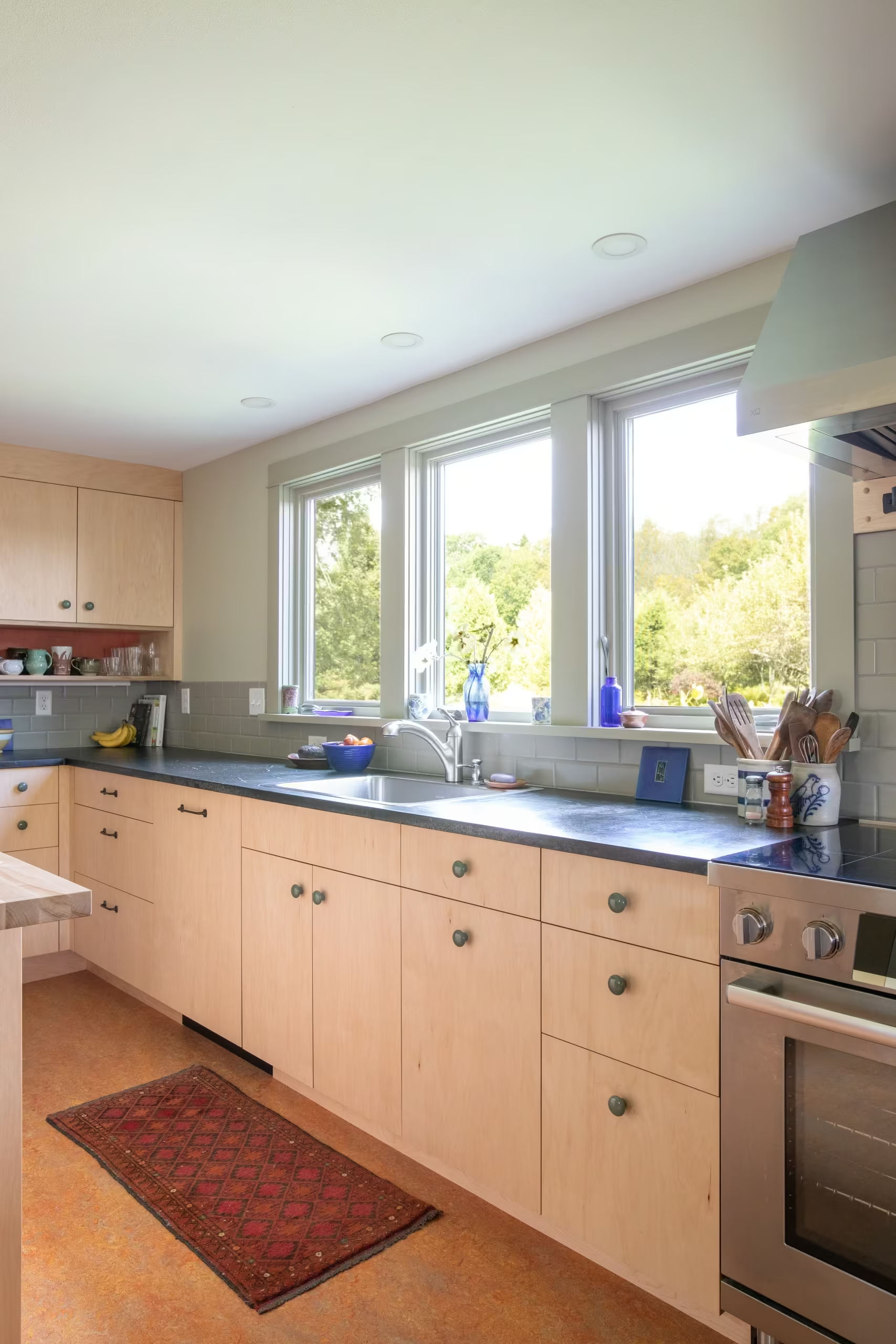


Toe Kicks
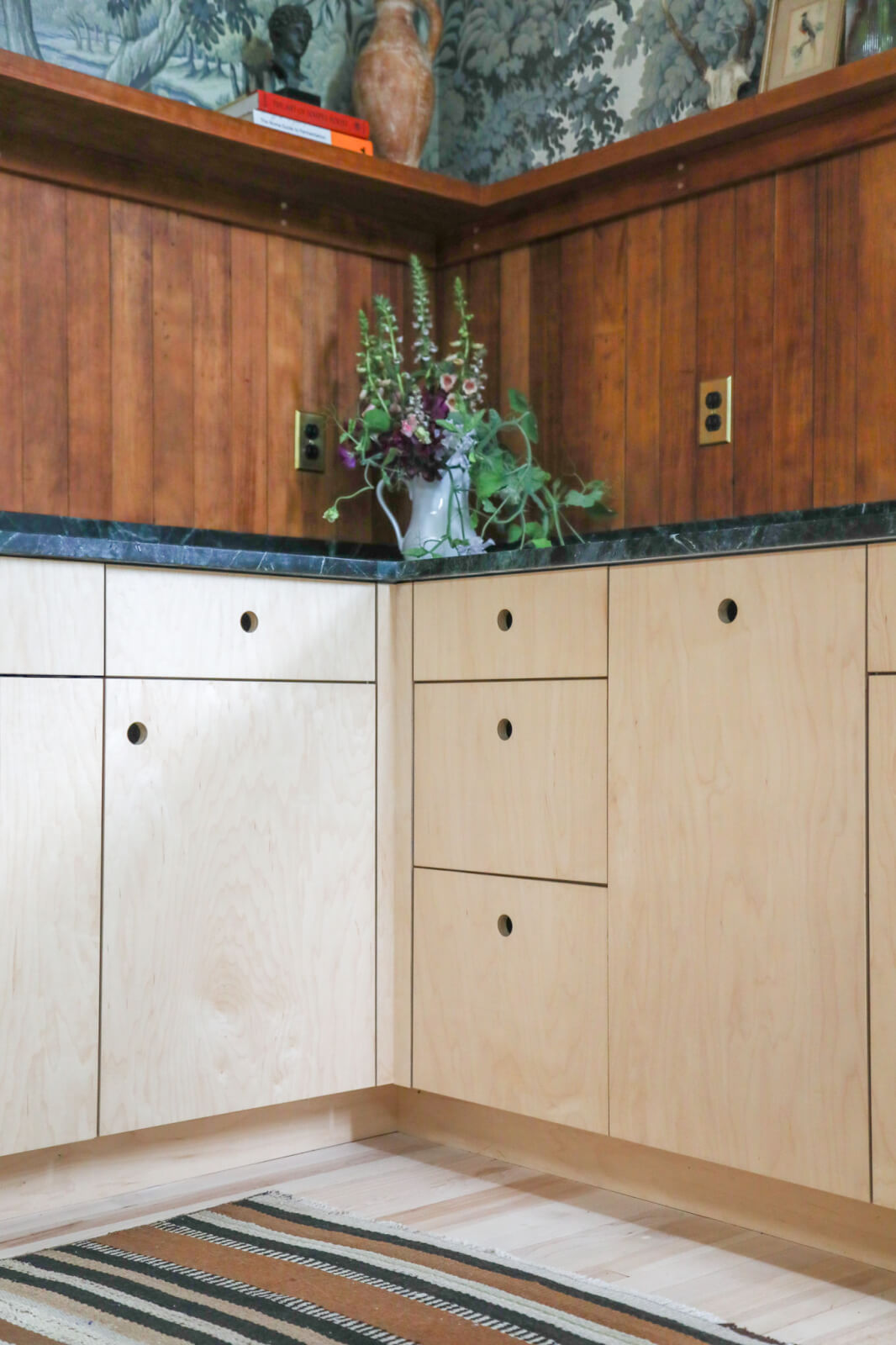
A toe kick is the recessed space between the floor and the bottom of your cabinets. While easy to overlook, toe kicks play an important role in both comfort and aesthetics.
Panel-ready appliances come with their own toe kicks, which should be coordinated with your cabinetry design.
Custom integrated toe kicks are available, but typically need to be retrofitted by an installer or contractor.
Toe kick heaters can also be installed—an especially nice feature if you’re sensitive to cold floors.



Panel-ready Appliances
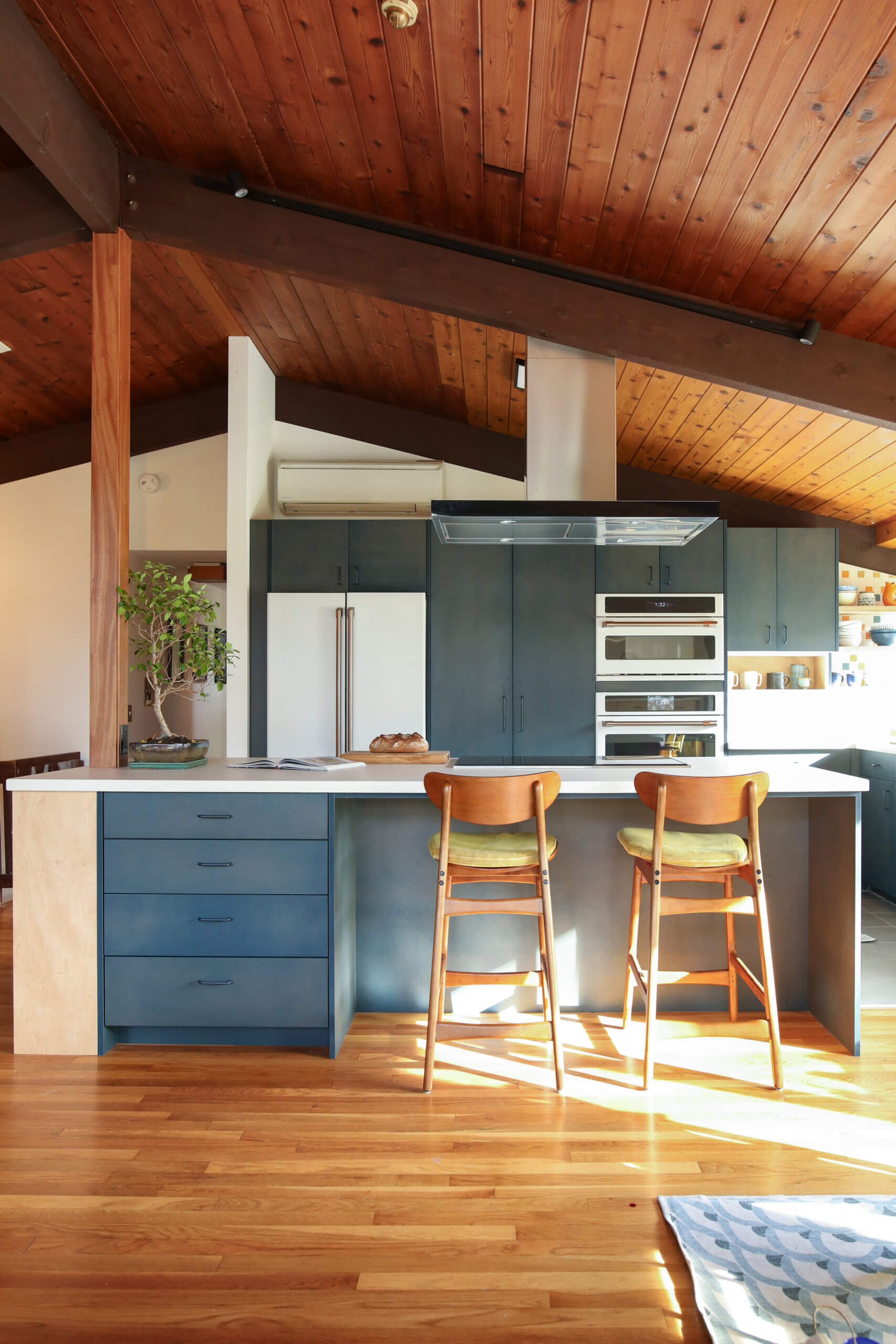
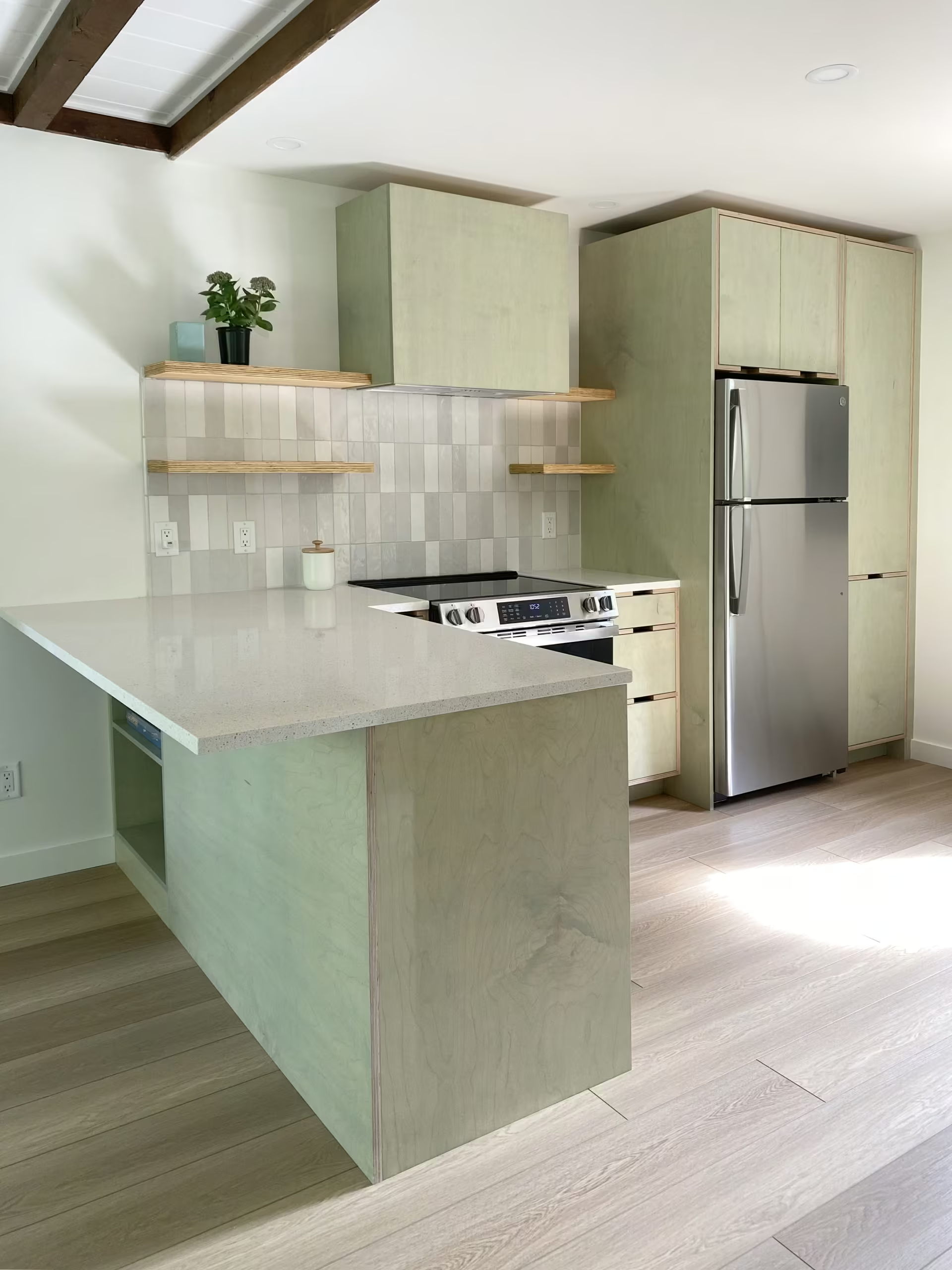
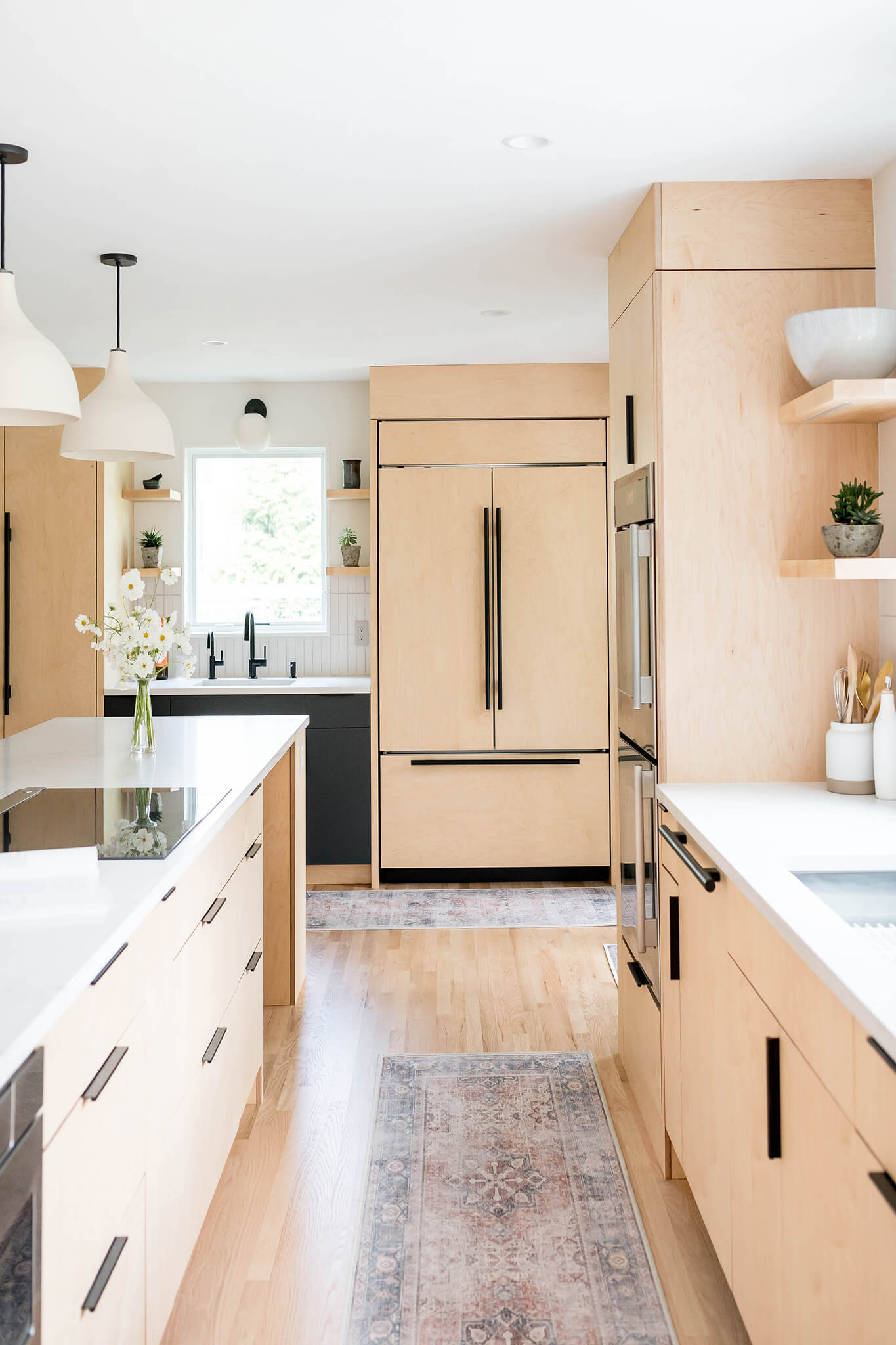
Panel-ready refrigerators and dishwashers are designed to accept a finished panel—often matching your cabinetry—on the front of the appliance. This creates a clean, minimalist, built-in appearance.
While panel-ready appliances are more expensive than standard options, they’re an excellent way to elevate your kitchen and achieve a cohesive, custom look. These appliances require specific hardware, which is typically purchased separately, so coordination with your contractor and cabinet maker is essential.

Final Thoughts
When it comes to kitchen appliances and fixtures, there’s no one-size-fits-all solution. The best choices depend on your space, lifestyle, and budget. The key is understanding the differences between options, planning for details like clearances and hardware, and coordinating early with your designer or contractor so everything integrates seamlessly with your cabinetry.
With the right planning, your kitchen can be both beautiful and highly functional for years to come. At Boxco Studio, we’re always here to help guide you through these decisions and make sure your cabinetry and appliances work together as a cohesive whole.
Interested in getting a project started?
Book a free design consultation with our sales team here.
Boxco Studio clients receive our expert cabinetry customization services when ordering their custom cabinetry from us! We’ll help you map out your ideal kitchen layout and visualize your design with 3D renderings. Explore our kitchen design process here or get in touch with us for a custom estimate and virtual consultation!
